
Let’s start with something most people don’t admit.
When someone says, “We’ll decide materials later,” the project almost always becomes harder and more expensive than it needs to be.
Materials are treated like the final layer. Something cosmetic. Something you pick once layouts are done. In commercial interiors, that thinking causes problems. Quiet ones at first, expensive ones later.
Materials decide how a space behaves on a normal working day. Not on day one. On day three hundred. In year three.
If you’re planning a commercial interior, this article is meant to help you think clearly about materials, not memorize product names.
Why materials matter more in commercial spaces than people expect
Here’s the difference between residential and commercial interiors.
At home, materials are used carefully.
At work, materials are used constantly.
Chairs move all day.
People walk the same paths again and again.
Cleaning happens on a schedule, not gently.
Repairs disrupt operations, not just comfort.
So when a material fails in a commercial space, it doesn’t just look bad. It interrupts work.
That’s why good commercial interiors are quiet about materials. They don’t show off. They hold up.
How to think about materials before choosing them
Instead of asking “What material should we use?”, it helps to ask three better questions:
- How often will this surface be used?
- What kind of wear will it see?
- How easy is it to repair or replace without stopping work?
If a material answers these questions well, it looks fine too.
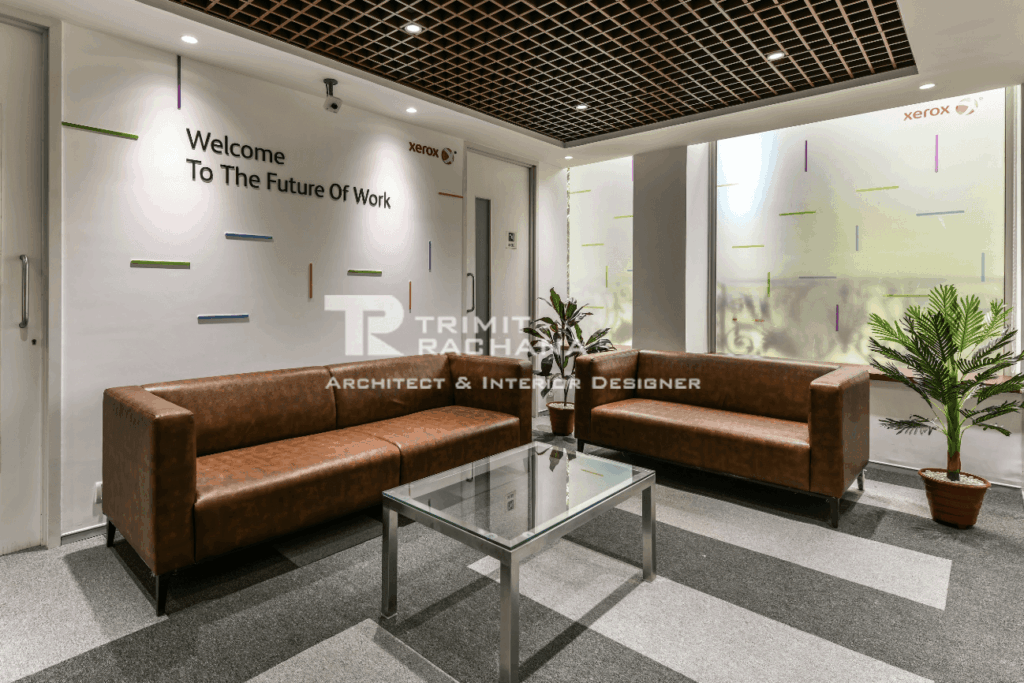
Flooring: where material mistakes show up first
If there’s one place where commercial interiors reveal poor material choices quickly, it’s the floor.
Floors take more abuse than any other surface. And yet, they’re often chosen based on how they look in a sample book.
That’s risky.
What commercial flooring actually needs to handle
In real use, floors deal with:
- Continuous foot traffic
- Chairs being dragged
- Trolleys and equipment movement
- Frequent cleaning
- Long hours without rest
A floor that looks good but wears badly becomes a problem fast.
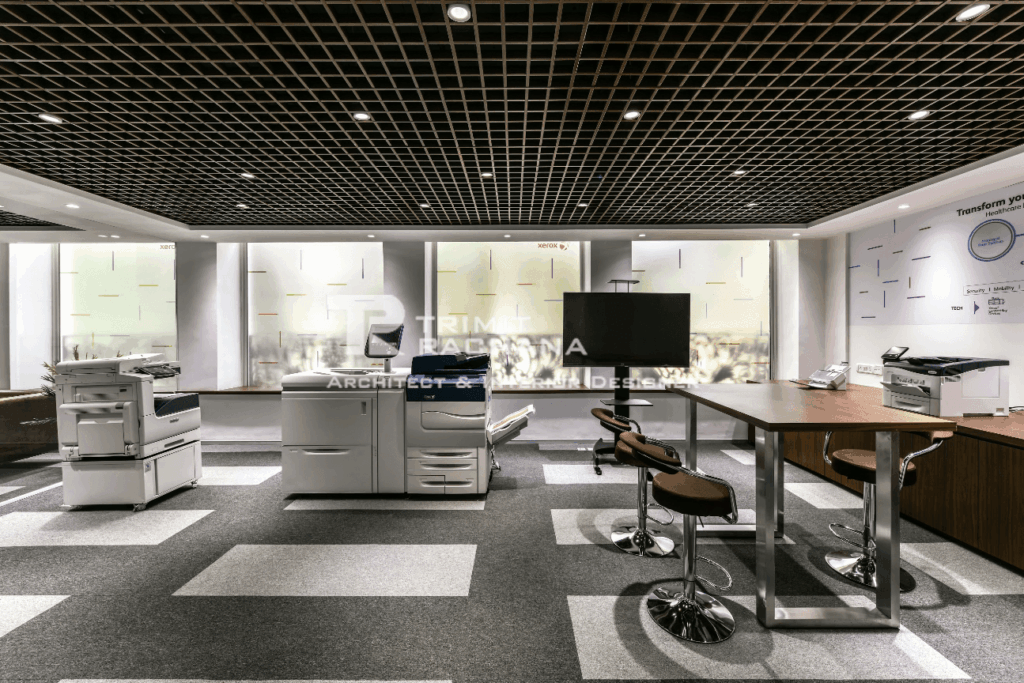
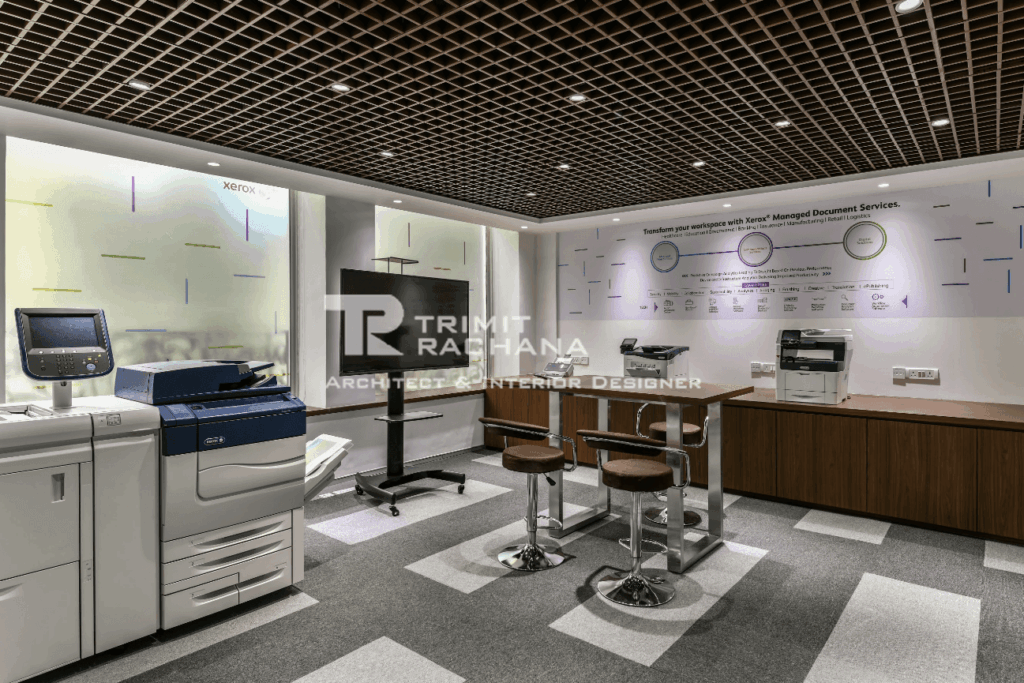
Carpet tiles (and why offices keep using them)
Carpet tiles are common in offices for a reason.
They help with:
- Noise control
- Comfort underfoot
- Easy replacement when damaged
If one tile gets stained or worn, it can be replaced without tearing up the whole floor. That matters in active offices.
Where they work well:
- Workstation areas
- Meeting rooms
- Quiet zones
Where they struggle:
- Pantry areas
- High-moisture zones
Carpet tiles are not weak. They’re specific. Used correctly, they last.
Vinyl flooring (the quiet workhorse)
Vinyl flooring is used everywhere in commercial interiors because it performs well under pressure.
It handles:
- High foot traffic
- Regular cleaning
- Consistent wear
It’s predictable, which is valuable in commercial spaces.
Where vinyl works well:
- Corridors
- Open office areas
- Retail interiors
The key thing with vinyl is installation. Poor installation shows. Good installation disappears.
Stone and tile flooring (used carefully)
Stone and tile floors feel permanent, and in some areas, that’s exactly what’s needed.
They’re usually used in:
- Lobbies
- Reception areas
- Public-facing spaces
They last a long time but bring trade-offs:
- Higher noise reflection
- Less flexibility
- More effort to modify later
They’re strong materials, but they demand planning.
A common flooring mistake to watch for
One mistake often shows up: using the same flooring everywhere.
Different zones behave differently. Floors should respond to that, not ignore it.
Ceilings: the part everyone forgets until it’s too late
Ceilings don’t get much attention until something goes wrong.
Then they become very important.
Ceilings affect:
- Sound
- Lighting quality
- Air movement
- Access for repairs
In commercial spaces, ceilings are working systems, not just covers.
Acoustic ceiling systems (why they matter)
Noise complaints are common in offices. Often, the ceiling is part of the reason.
Acoustic ceiling systems help control:
- Echo
- Background noise
- Meeting room spillover
They’re not about silence. They’re about reducing fatigue.
Used well, they make a space feel calmer without anyone noticing why.
Open ceilings (when they work, when they don’t)
Open ceilings are visually appealing, but they require careful planning.
They:
- Expose services
- Increase noise
- Require precise coordination
They work best when:
- Ceiling height is generous
- Services are well planned
- Acoustics are addressed elsewhere
Used casually, they create noise and maintenance issues.
How Trimit Rachana looks at material decisions
Trimit Rachana approaches material selection by asking how the space will behave over time, not how it will photograph.
The focus stays on:
- Durability
- Maintenance ease
- Repair flexibility
- Real usage patterns
Materials are chosen to support work, not interrupt it.
Now let’s move to the materials people interact with constantly but rarely think about until something feels off.
Walls. Partitions. Lighting elements. Furniture surfaces.
These materials shape how a space feels to work in, not how it looks on day one.
Wall and partition materials: where planning meets daily use
Walls in commercial interiors do more than divide space.
They manage sound. They guide movement. They carry wear. They hide services.
Choosing wall materials without considering daily interactions is a common mistake.
Gypsum partitions (used almost everywhere)
Gypsum board partitions are common for good reason.
They offer:
- Speed of construction
- Flexibility in layout changes
- Clean finishes
- Cost control
They work well in:
- Office cabins
- Meeting rooms
- Back-of-house areas
What matters here is not the board itself, but what goes inside it. Insulation, framing quality, and joint finishing decide performance.
Glass partitions (used with intention)
Glass partitions are often chosen for openness and light flow.
They work best when:
- Visual connection is important
- Natural light needs to travel
- Teams benefit from visibility
But glass has trade-offs:
- Sound control needs extra planning
- Privacy must be managed
- Cleaning effort increases
Glass works when acoustics and usage are addressed early, not assumed away.
Solid wall finishes (laminates, panels, paint)
Painted walls are still widely used because they are:
- Easy to maintain
- Easy to repair
- Cost effective
Laminates and panels add durability in:
- Corridors
- High-touch zones
- Areas with furniture contact
The key is to match finish strength with usage, not overbuild every wall.
Lighting-related materials: more than fixtures
Lighting in commercial interiors is not just about choosing lights.
It’s about how light interacts with surfaces.
Good lighting planning depends on:
- Ceiling material
- Wall reflectance
- Task type
Poor lighting choices increase fatigue, even when they meet technical standards.
Diffused lighting vs focused lighting
Diffused lighting works well for:
- General office areas
- Circulation zones
Focused lighting suits:
- Meeting tables
- Task areas
- Display zones
The mistake is using one approach everywhere.
Material interaction with light
Glossy surfaces reflect light sharply.
Matte surfaces soften it.
This affects:
- Screen glare
- Visual comfort
- Overall brightness perception
Lighting and material selection should be discussed together, not separately.
Joinery and furniture materials: where wear is constant
Furniture and fixed joinery are in daily contact.
Desks, storage units, counters, and cabinets must handle:
- Repeated use
- Cleaning
- Load
Materials here need to be forgiving.
Laminates (still widely used)
Laminates remain popular because they:
- Resist wear
- They are easy to clean
- Offer consistent finishes
They work well for:
- Workstations
- Storage units
- Pantry counters
Not all laminates are equal. Grade matters more than color.
Wood finishes (used selectively)
Wood finishes add warmth, but they need care.
They are best used in:
- Leadership areas
- Client-facing zones
They require:
- Controlled usage
- Maintenance planning
Using wood everywhere increases upkeep without adding value.
Upholstery and soft materials
Seating materials affect comfort and durability.
In commercial use:
- Fabric selection matters
- Cleaning cycles matter
- Replacement ease matters
Comfort should not come at the cost of constant repair.
How materials quietly affect cost and timelines
Materials influence more than budget lines.
They affect:
- Installation time
- Coordination effort
- Maintenance cycles
- Future modification cost
Complex materials slow execution.
Simple materials speed it up.
This does not mean cheap.
It means predictable.
A simple way to judge material choices
If you’re unsure about a material, ask:
- How often will this be touched?
- How easy is it to clean?
- How difficult is it to replace?
If the answers feel uncertain, the material needs review.
How Trimit Rachana approaches material selection
Trimit Rachana approaches materials with a simple principle:
Materials should support work, not create friction.
The focus stays on:
- Usage patterns
- Durability
- Maintenance effort
- Long-term adaptability
This keeps spaces functional long after handover.
Key Takeaways
- Materials are performance decisions, not final touches
- Floors and ceilings take the most stress
- Walls and partitions manage sound and movement
- Lighting works best when planned with surfaces
- Furniture materials need to handle daily use
- Simple, well-chosen materials age better
- Planning materials early reduces cost and stress
Good materials do their job quietly.
Materials decide how a space lives.
Commercial interior materials are not about making a space impressive.
They are about making it usable. Day after day. Year after year.
When materials are chosen with understanding, spaces feel calm, stable, and reliable. When they are chosen casually, problems appear slowly and stay for a long time.
The best commercial interiors rarely shout about materials. They let the work happen without interruption.
If you are planning a commercial interior and want material choices that hold up to real use, Trimit Rachana works with planning-led material selection to support long-term performance, not short-term appeal.
FAQs
1. What are commercial interior design materials?
Commercial interior design materials include flooring, ceilings, wall finishes, partitions, lighting-related materials, joinery, and furniture surfaces used in business spaces such as offices, retail, hospitality, healthcare, and mixed-use interiors.
2. How are commercial interior materials different from residential materials?
Commercial interior materials are chosen for higher durability, frequent cleaning, and constant use. They must withstand heavier wear, operate for longer hours, and require easier maintenance than residential materials.
3. Which flooring materials work best for office interiors?
Office interiors commonly use carpet tiles for acoustic control and vinyl flooring for durability and easy cleaning. The choice depends on usage zones, foot traffic, and maintenance needs rather than appearance alone.
4. Why are ceiling materials important in commercial spaces?
Ceiling materials affect acoustics, lighting performance, air movement, and service access. Poor ceiling choices can increase noise levels and make maintenance difficult during daily operations.
5. When should glass partitions be used in commercial interiors?
Glass partitions work well where visual connection and natural light are important, such as meeting rooms and collaborative areas. Acoustic treatment and privacy planning are required to avoid noise and comfort issues.
6. How do materials affect the cost of a commercial interior project?
Materials influence cost through installation time, coordination effort, durability, and future replacement needs. Simple, well-planned materials often reduce long-term cost even if they are not the cheapest upfront.
7. What are common mistakes in commercial material selection?
Common mistakes include choosing materials based only on samples, using the same material in all areas, ignoring maintenance needs, and finalizing materials too late in the project.
8. How does Trimit Rachana approach material selection?
Trimit Rachana approaches material selection based on usage patterns, durability, maintenance effort, and long-term performance rather than short-term visual impact.