Commercial interior design trends are often misunderstood.
Many people think trends are about colors, finishes, or furniture styles. In reality, most current trends are driven by how businesses operate, how people use space, and how costs and timelines are managed.
Trends today are less about appearance and more about function, control, and long-term use.
This article explains the commercial interior design trends that are actually shaping offices and business spaces, not just the ones that look good in photos.
Why commercial interior design trends have changed
Earlier, commercial interiors focused on:
- Visual impact
- Brand expression
- Static layouts
Today, priorities are different.
Businesses now care more about:
- Space efficiency
- Flexibility
- Maintenance effort
- Employee comfort
- Cost control over time
As a result, trends have shifted from surface-level design to planning-led decisions.
Trend 1: Function-first space planning
One of the strongest trends in commercial interiors is the move toward function-first planning.
Instead of asking “How should this look?”, teams now ask:
- How will people use this space daily?
- What needs to change over time?
- Which areas need quiet?
- Which areas need collaboration?
This trend affects:
- Layout structure
- Seating density
- Meeting room sizes
- Circulation paths
Spaces are planned based on use patterns, not assumptions.
Impact on office interiors
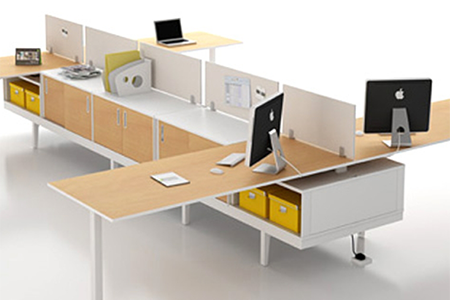
In offices, function-first planning has led to:
- Fewer fixed cabins
- More shared work zones
- Better meeting room distribution
- Clear separation between quiet and active zones
This reduces rework and improves daily use.
Trend 2: Flexible layouts over fixed formats
Fixed layouts struggle when teams grow, shrink, or shift roles.
Flexible planning allows:
- Workstations to be reconfigured
- Meeting rooms to change function
- Spaces to adapt without major rebuilds
This does not mean temporary design.
It means planned flexibility.
How flexibility shows up in execution
Flexibility is achieved through:
- Modular furniture systems
- Movable partitions
- Power and data planned for change.
- Neutral base finishes
Flexibility reduces future interior costs.
Trend 3: Office interiors designed for hybrid work
Hybrid work has changed how offices are used.
Many offices now see:
- Fewer full-capacity days
- More meetings than desk work
- Shorter visits
- Higher demand for shared spaces
This has shifted office interior priorities.
Design responses to hybrid work
Current office interiors often include:
- Fewer assigned desks
- More meeting and discussion spaces
- Better video call planning
- Improved acoustics
Design now supports interaction over occupancy.
Trend 4: Sustainable choices driven by maintenance logic
Sustainability in commercial interiors is no longer only about certification.
It is driven by:
- Material lifespan
- Ease of maintenance
- Replacement cost
- Energy efficiency
Clients are choosing materials that:
- Last longer
- They are easier to clean
- Require less frequent replacement.
This lowers operating cost.
Practical sustainability in interiors
Examples include:
- Durable flooring over delicate finishes
- Efficient lighting layouts
- Controlled material variety
Sustainability is now a cost decision, not a statement.
Trend 5: Smart planning for systems, not visible tech
Technology is present in almost every commercial interior.
But the trend is not visible in gadgets. It is invisible planning.
This includes:
- Proper power distribution
- Strong data layouts
- Clean ceiling coordination
- Accessible service routes
When systems are planned well, the space works better and costs less to maintain.
Trend 6: Experience-led commercial spaces
Experience does not mean decoration.
It means:
- Comfortable lighting
- Clear movement
- Reduced noise stress
- Logical zoning
Experience-led design improves:
- Productivity in offices
- Dwell time in retail
- Comfort in hospitality
These outcomes come from planning, not finishing.
How Trimit Rachana aligns trends with execution reality
Trimit Rachana approaches trends through the lens of usability, execution feasibility, and long-term value.
Rather than applying trends as layers, the focus remains on:
- Practical layouts
- Controlled material choices
- Systems that support daily use
This ensures trends improve functionality rather than adding cost.
How trends behave differently across commercial space types
Not every trend works the same way in every space.
Context matters more than popularity.
Office interiors
Office interiors absorb trends faster than other commercial spaces.
Current office-focused trends include:
- Fewer assigned workstations
- Higher ratio of meeting and collaboration spaces
- Better acoustic separation
- Clear zoning between focused and active areas
These trends respond to how offices are actually used today.
Where offices struggle:
- Over-designed collaboration areas that remain unused
- Under-sized meeting rooms
- Poor acoustic control
The trend itself is not the issue. Misapplication is.
Retail interiors
Retail trends are driven by behavior, not layout alone.
Current retail interior trends focus on:
- Clear sightlines
- Easy navigation
- Flexible display systems
- Lighting that supports product visibility
Retail spaces fail when trends override practicality, such as:
- Excessive display density
- Complex finishes that are hard to maintain
Retail interiors benefit from controlled simplicity.
Hospitality interiors
Hospitality trends focus on durability and comfort.
Key trends include:
- Materials that handle heavy use
- Simple layouts that support service flow
- Lighting that supports different times of day
Hospitality interiors struggle when visual ideas ignore maintenance needs.
Healthcare interiors
Healthcare trends are driven by regulation and clarity.
Current focus areas include:
- Easy-to-clean materials
- Clear movement paths
- Reduced visual noise
Here, trends follow function closely. Design ideas that ignore compliance rarely survive execution.
Mixed-use commercial spaces
Mixed-use interiors demand balance.
Trends that work here include:
- Clear zoning between uses
- Neutral base design
- Systems are planned for different activity levels
Trends fail when one zone dominates planning decisions.
Trends that reduce cost over time
Some trends help control costs, even if they appear simple.
1. Neutral base with focused highlights
Using neutral base finishes with limited highlight zones:
- Reduces material complexity
- Simplifies future changes
- Lowers maintenance effort
This trend supports long-term use.
2. Modular planning
Modular furniture and layout systems:
- Allow changes without rebuilds
- Reduce future interior work.
- Support team growth or reduction
This trend protects future budgets.
3. Planned system access
Trends that prioritize:
- Accessible ceilings
- Logical service routes
- Clear documentation
Reduce downtime and maintenance costs.
Trends that quietly increase cost and risk
Not all trends are helpful.
1. Over-customization
Highly customized elements:
- Increase execution time
- Limit replacement options
- Raise future modification cost.
Customization should be selective.
2. Trend-driven materials without performance review
Materials chosen only for appearance are often:
- Wear out faster
- Require special maintenance
- Increase replacement cost
Performance matters more than visual novelty.
3. Poorly planned open spaces
Open spaces without acoustic planning lead to:
- Complaints
- Retrofitting costs
- Productivity issues
Open layouts need structure, not assumption.
Why do some trends fail during execution
Trends often fail not because they are wrong, but because:
- They are copied without context
- They ignore site conditions.
- They are not coordinated across systems.
Execution exposes planning gaps quickly.
A trend that looks good in concept must survive:
- Electrical coordination
- HVAC routing
- Fire safety requirements
- Daily use patterns
If it cannot, it should not be applied.
Long-term trend stability: what lasts and what fades
Stable trends share common traits:
- They support multiple use cases
- They reduce effort, not add it.
- They work across different team size.s
Short-lived ideas often:
- Depend on novelty
- Requires frequent adjustment
- Increase maintenance effort
Commercial interiors benefit from quiet stability, not constant change.
How Trimit Rachana evaluates trends before applying them
Trimit Rachana evaluates trends based on:
- Usability
- Execution feasibility
- Long-term maintenance impact
Trends are applied only when they support daily operation and realistic execution, not because they are widely discussed.
Key Takeaways
- Commercial interior trends are driven by use, not style
- Offices prioritize flexibility and acoustic control
- Retail focuses on clarity and adaptability
- Hospitality values durability and service flow.
- Healthcare follows compliance-led planning
- Some trends reduce cost; others increase risk
- Context matters more than popularity
Trends should support how spaces work, not just how they look.
Trends are tools, not goals
Commercial interior design trends are useful only when applied with purpose.
The most effective interiors:
- Age well
- Adapt easily
- Support daily operations
- Control future cost
Trends should serve the business, not distract from it.
Careful evaluation turns trends into assets instead of liabilities.
If you are planning a commercial interior and want to apply current trends without increasing long-term cost or execution risk, Trimit Rachana works with planning-led design and execution frameworks that support stable, usable business spaces.
FAQs
1. What are the most important commercial interior design trends today?
The most important trends focus on function, flexibility, and long-term use. These include flexible layouts, better acoustic planning, hybrid work offices, durable materials, and systems designed for easy maintenance.
2. How do commercial interior trends affect office design?
Office design trends now prioritize meeting spaces, shared zones, acoustic control, and fewer fixed desks. Offices are planned around how teams work, not around maximum seating capacity.
3. Are commercial interior design trends the same for all space types?
No. Office, retail, hospitality, healthcare, and mixed-use spaces respond to trends differently. A trend that works in an office may not work in retail or healthcare without changes.
4. Do modern commercial interior trends increase project cost?
Some trends help reduce long-term cost, such as modular layouts and durable materials. Others increase cost when they involve heavy customization or complex finishes without a performance review.
5. How does hybrid work influence commercial interior planning?
Hybrid work has reduced the focus on fixed desks and increased demand for meeting rooms, collaboration zones, and better video call planning. Space is designed for interaction, not constant occupancy.
6. What sustainability trends are common in commercial interiors?
Sustainability now focuses on material lifespan, ease of cleaning, energy-efficient lighting, and reduced replacement needs. Maintenance logic, rather than a visual statement, drives these choices.
7. Why do some commercial interior trends fail during execution?
Trends fail when copied without context, ignored site conditions, or not coordinated with electrical, HVAC, and safety systems. Execution reveals gaps quickly.
8. How does Trimit Rachana apply commercial interior trends?
Trimit Rachana applies trends only when they support usability, execution clarity, and long-term operation. Trends are evaluated for practicality before being used in a project.