
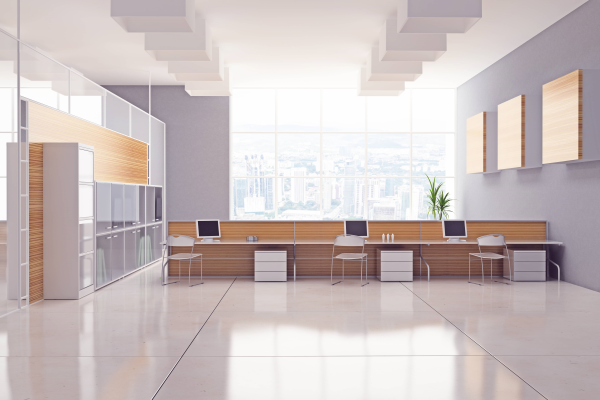
Commercial interior design is a broad category. It covers any interior space built for business use, not personal living. But “commercial” does not mean every space can be planned the same way.
An office interior has different needs than a retail store. A clinic runs differently from a restaurant. A mixed-use space needs stronger zoning than a single-purpose space. When teams treat all commercial interiors as the same, projects usually face one of these problems:
- The layout looks fine, but it does not support daily operations
- Systems like electrical, data, and air distribution do not match the plan.
- Finish choices wear out fast and start looking tired early.
- The budget moves because key requirements were not defined up front.
This guide breaks down the main types of commercial interior design and explains what each one needs to function well. The goal is to help you plan better, compare proposals more fairly, and avoid “fix it later” decisions that cost more.
First, what “commercial interior design” includes
Commercial interior design usually covers a combination of:
- Space planning (how the area is divided and used)
- Interior layout (where rooms, seats, counters, and storage go)
- Material and finish selection (flooring, ceilings, wall finishes, joinery)
- Lighting planning (task, ambient, display, feature lighting as needed)
- Coordination with services (electrical, HVAC, plumbing, data)
- Execution planning (site work sequence, timelines, handover readiness)
Some projects are design-only. Some include design plus execution support. Some are turnkey, where one team manages design and fit-out delivery.
The type of commercial space determines which of these elements becomes most important.
1) Office interior design and corporate interiors
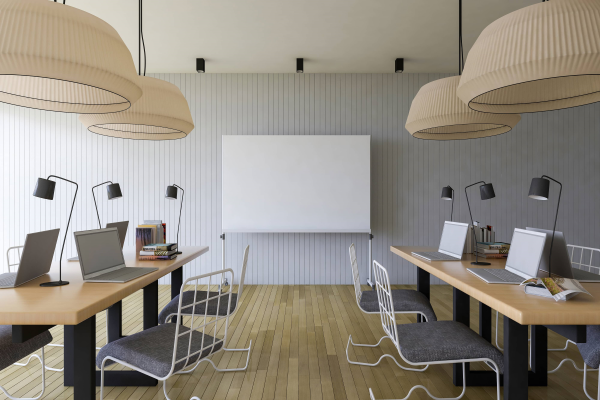
Office projects often look simple from the outside. Many people assume an office is desks, meeting rooms, and a reception. In reality, office interiors are system-heavy and usage-heavy. They must support long working hours, repeated meetings, team coordination, and technology demands.
Where office interior design is used
- Corporate offices (single company or multi-tenant floors)
- Start-up and scale-up offices
- Co-working spaces and flexible offices
- Back offices and operations centers
- Sales floors, support teams, and admin teams
What makes office planning different
Office interior design works only when it matches how the business operates. Two offices with the same headcount can still need very different planning because:
- Some teams need privacy (calls, finance, legal, HR)
- Some teams need collaboration zones (creative, product, planning)
- Some teams need quiet focus (tech, writing, analysis)
- Some businesses need many client meetings, while others do not.
Core zones in corporate office interior design
A typical corporate office interior includes:
- Reception and waiting
- Workstations (open seating or clustered teams)
- Private cabins or manager rooms (if needed)
- Meeting rooms (small and large)
- Breakout area or lounge
- Pantry and dining area
- Storage, printing, utility, IT zones
Systems that drive office interiors
Office interiors often cost more because of systems, not finishes. Key system areas include:
- Electrical points per workstation
- Data and network points (including Wi-Fi planning)
- Meeting room AV needs (screen, camera, microphones if required)
- Access control for entry and restricted zones
- Lighting for task comfort across long hours
- Air distribution planning to prevent closed rooms from becoming hot or stale.
Office-specific cost drivers
Office interiors usually see cost increases due to:
- Many partitions and enclosed rooms
- High-density seating with high electrical and data loads
- Acoustic needs for meeting rooms and private areas
- Glass partitions and door hardware complexity
- Ceiling coordination for lights, air diffusers, sprinklers, and detectors
Office interior design “fit-out” vs design-only
In office projects, “fit-out” usually means the full interior build and setup, not just drawings. It typically includes partitions, flooring, ceiling, electrical, lighting, HVAC distribution work, joinery, paint, and site coordination.
If you compare quotes, make sure you know whether the pricing covers:
- Design only
- Design + site supervision
- Full office interior fit-out
Turnkey office interior solution
2) Retail interior design for shops, outlets, and showrooms
Retail interiors are designed to capture customer attention, enhance product visibility, facilitate movement flow, and enable fast decision-making. A retail store is often smaller than an office, but the pressure is different. A small mistake in retail layout can reduce footfall flow, hide key products, or create awkward browsing.
Where retail commercial interiors are used
- Brand stores and franchise outlets
- Product showrooms
- High-street stores
- Mall outlets
- Experience centers and display-driven spaces
What makes retail planning different
Retail interiors are not only about “looking good.” They must support:
- Clear entry impact (what the customer sees first)
- Product discovery (how customers find categories)
- Browsing comfort (space to pause, compare, and decide)
- Staff access (restocking, storage movement)
- Billing flow (queue planning, cash counter visibility)
Core zones in retail interior design
A typical retail space includes:
- Front display or window zone
- Primary product displays
- Secondary displays and wall systems
- Trial or fitting areas (if required)
- Cash counter and billing
- Back-of-house storage and staff zone
Systems that drive retail interiors
Retail is strongly influenced by:
- Lighting quality and placement (display lighting matters a lot)
- Electrical planning for digital screens, signage, and counters
- Security planning (visibility, camera placement, anti-theft needs)
- Durable finishes that can handle heavy daily footfall
Retail-specific cost drivers
Retail costs often rise because of:
- Custom display units and joinery
- High finish standards in customer-facing zones
- Lighting fixtures and wiring complexity
- Short timelines tied to store opening dates
If the store must open by a fixed date, execution planning becomes as important as design. Late material selection or late approvals often cause timeline compression, which can increase cost.
3) Hospitality interior design for restaurants, cafes, and similar spaces
Hospitality interiors experience constant use, higher wear, and complex service flows. Unlike offices where people sit for long work hours, hospitality spaces have continuous movement. Guests enter, sit, dine, leave. Staff move fast. Cleaning happens often. Finishes take real stress.
Where hospitality commercial interiors are used
- Restaurants and cafes
- Cloud kitchen front-end dining zones
- Lounges and waiting areas
- Hotel common areas (where applicable)
- Food courts and service zones
What makes hospitality planning different
Hospitality interiors must balance:
- Guest comfort (seating spacing, lighting mood, noise control)
- Service speed (staff movement paths, counter access)
- Cleaning practicality (spills, stains, maintenance)
- Seating density vs comfort (business decision, but design must support it)
Core zones in hospitality interiors
A hospitality plan often includes:
- Entry and waiting
- Seating zones and table layout
- Service counter or host station
- Food pickup and billing (if applicable)
- Restrooms
- Back-of-house circulation (even if the kitchen is separate)
Systems that drive hospitality interiors
Hospitality planning usually needs close coordination with:
- Ventilation requirements (especially where food service is involved)
- Electrical planning for kitchen support zones, counters, and POS systems
- Lighting planning for both mood and visibility
- Fire and safety coordination was required by building norms.
Hospitality-specific cost drivers
Cost rises when hospitality spaces include:
- High durability flooring and wall finishes
- Custom seating, upholstery, and joinery
- Complex lighting layering (ambient + focused + feature)
- Tight execution timelines due to rental and launch pressure
A common mistake is choosing finishes based solely on appearance. Hospitality finishes should be selected for durability and cleaning; otherwise, the space degrades quickly.
4) Healthcare interior design for clinics and medical spaces
Healthcare interiors are function-first. They must support hygiene, privacy, and operational flow. Unlike retail or hospitality, the primary goal is not visual impact. It is safety, clarity, and controlled movement.
Where healthcare commercial interiors are used
- Clinics
- Consultation centers
- Diagnostic centers (when applicable)
- Therapy and wellness clinics
- Dental and specialist setups (when applicable)
What makes healthcare planning different
Healthcare interiors must support:
- Patient privacy (visual and sound privacy)
- Clear movement flow to reduce confusion.
- Cleanability and hygiene-friendly finishes
- Staff efficiency (short paths between related functions)
- Storage planning for supplies and records
Core zones in healthcare interiors
Healthcare interiors commonly include:
- Reception and waiting
- Consultation rooms
- Treatment rooms or procedure rooms (depending on scope)
- Staff zones
- Storage and utility areas
- Washrooms (public and staff where needed)
Systems that drive healthcare interiors
Healthcare spaces are sensitive to:
- Lighting quality (especially in treatment zones)
- Electrical planning for equipment
- Air quality and ventilation planning
- Data needs for operations and records
Healthcare-specific cost drivers
Costs increase because healthcare interiors often require:
- More detailed planning and zoning
- Stronger privacy control
- Materials that support repeated cleaning
- System coordination with equipment placement
Even small layout mistakes can cause operational friction. That is why healthcare planning benefits from careful upfront detail rather than quick design decisions.
5) Mixed-use commercial interiors
Mixed-use commercial interior design means one space supports multiple business functions. This is increasingly common in modern commercial buildings and business models.
Examples include:
- Office + client-facing showroom
- Retail + small service consultation rooms
- Reception + training area + workstations
- Multi-brand display + meeting suites
What makes mixed-use planning different
Mixed-use interiors need strong zoning. Without clear zoning, one function interrupts another.
Planning must define:
- Which zones are public vs restricted
- How movement happens between zones
- How noise and privacy are managed
- How services support different functions
Systems that drive mixed-use interiors
Mixed-use projects often require:
- Different lighting standards for different zones
- Separate access control levels
- Multiple seating styles and circulation needs
- Careful HVAC distribution so each zone remains comfortable.
Mixed-use cost drivers
Costs rise because:
- More coordination is required
- Different zones often need different finish standards.
- Phasing may be needed (one zone starts operations earlier)
- Joinery and partition requirements can increase.
Mixed-use spaces can perform very well when planned right, but they need more discipline upfront.
How to choose the right type of commercial interior approach
This is where many projects become unclear. Businesses know they want “commercial interiors,” but they do not define what the space must do on a daily basis.
A good starting brief answers these questions:
Usage and operations
- Who uses the space daily (staff, customers, patients, guests)
- How long do they stay
- What activities repeat every day
- What peak time looks like (rush hours, meeting hours, service hours)
Space function
- Which zones must exist (meeting rooms, treatment rooms, display areas)
- Which zones are optional (lounge, breakout, feature display)
- What privacy level is needed
Systems and constraints
- Electrical and data intensity
- Air distribution needs
- Plumbing needs (pantry, washrooms, service areas)
- Building restrictions (work timings, approvals, material movement)
When these are defined early, design becomes practical, and budgets become more stable.
Entity-level cost and complexity comparison across types
To make the differences clear, here is how cost and complexity often behave across types. This is not “pricing.” It is the pattern of where cost usually comes from.
Office (corporate interiors)
- Cost pressure: partitions, electrical, data, meeting rooms, acoustics
- Complexity pressure: system coordination, seating density, room planning
Retail (commercial interiors)
- Cost pressure: lighting, displays, joinery, visible finishes
- Complexity pressure: customer movement flow, speed-to-open
Hospitality (commercial interior fit-out)
- Cost pressure: durability, furniture, lighting layers, service planning
- Complexity pressure: cleaning, wear, staff flow
Healthcare (commercial interior design services)
- Cost pressure: planning detail, privacy needs, system coordination
- Complexity pressure: hygiene flow, patient experience, equipment placement
Mixed-use (commercial interior solutions)
- Cost pressure: coordination across zones, varied finishes, phasing
- Complexity pressure: zoning, noise control, access separation
Understanding these patterns helps you ask better questions during planning and vendor discussions.
Key takeaways
- Commercial interior design involves multiple space types, each with its own planning logic.
- Office interior design is system-heavy and sensitive to seating density, partitions, and data needs.
- Retail interior design relies on lighting, display planning, customer movement, and fast execution.
- Hospitality interiors require robust durability planning and efficient staff flow.
- Healthcare interiors need careful zoning, privacy control, and hygiene-friendly material choices.
- Mixed-use commercial interiors demand clear zoning and higher coordination to avoid conflicts.
- Better briefs lead to better layouts, fewer changes, and more stable budgets.
Next Steps?
Commercial interiors work when they support real use. Not assumptions. Not quick templates. The right space type approach makes layout planning clearer, systems more aligned, and execution easier to control.
If you are planning an office, retail store, clinic, hospitality space, or a mixed-use commercial setup, start by defining how the space must function daily. Once that is clear, design and fit-out decisions become faster and more accurate.
Connect with Trimit Rachana to plan a commercial interior that fits your business use, space type, and execution realities.
Frequently Asked Questions (FAQs)
1. What are the main types of commercial interior design?
The main types include office, retail, hospitality, healthcare, and mixed-use commercial interior design. Each type serves a different business function and requires different planning and systems.
2. How is office interior design different from other commercial interiors?
Office interior design focuses on workstations, meeting rooms, data and electrical planning, and long working hours. It is more system-heavy than retail or hospitality interiors and requires careful layout planning for productivity and comfort.
3. What does retail interior design include in commercial spaces?
Retail interior design includes product display planning, lighting for visibility, customer movement flow, billing zones, storage areas, and finishes that can handle daily foot traffic while maintaining visual consistency.
4. Why is hospitality interior design usually more expensive?
Hospitality interior design often costs more due to heavy daily use, durable material requirements, custom furniture, layered lighting, service coordination, and the need for easy cleaning and long-term maintenance.
5. What makes healthcare interior design more complex?
Healthcare interior design requires strict zoning, privacy control, hygiene-friendly materials, efficient staff movement, and coordination with medical equipment. Planning errors can directly affect daily operations.
6. What is mixed-use commercial interior design?
Mixed-use commercial interior design combines multiple functions in one space, such as office and retail or office and client-facing zones. It requires strong zoning, access control, and system coordination to prevent conflicts.
7. How do commercial interior design services differ by space type?
Commercial interior design services vary based on function. Offices focus on systems and seating; retail, on displays and lighting; hospitality, on durability and service flow; and healthcare, on planning detail and hygiene.
8. How do I choose the right commercial interior design approach?
The right approach depends on daily usage, number of users, operational flow, privacy needs, system requirements, and future growth. Defining these early helps avoid layout changes and cost increases later.